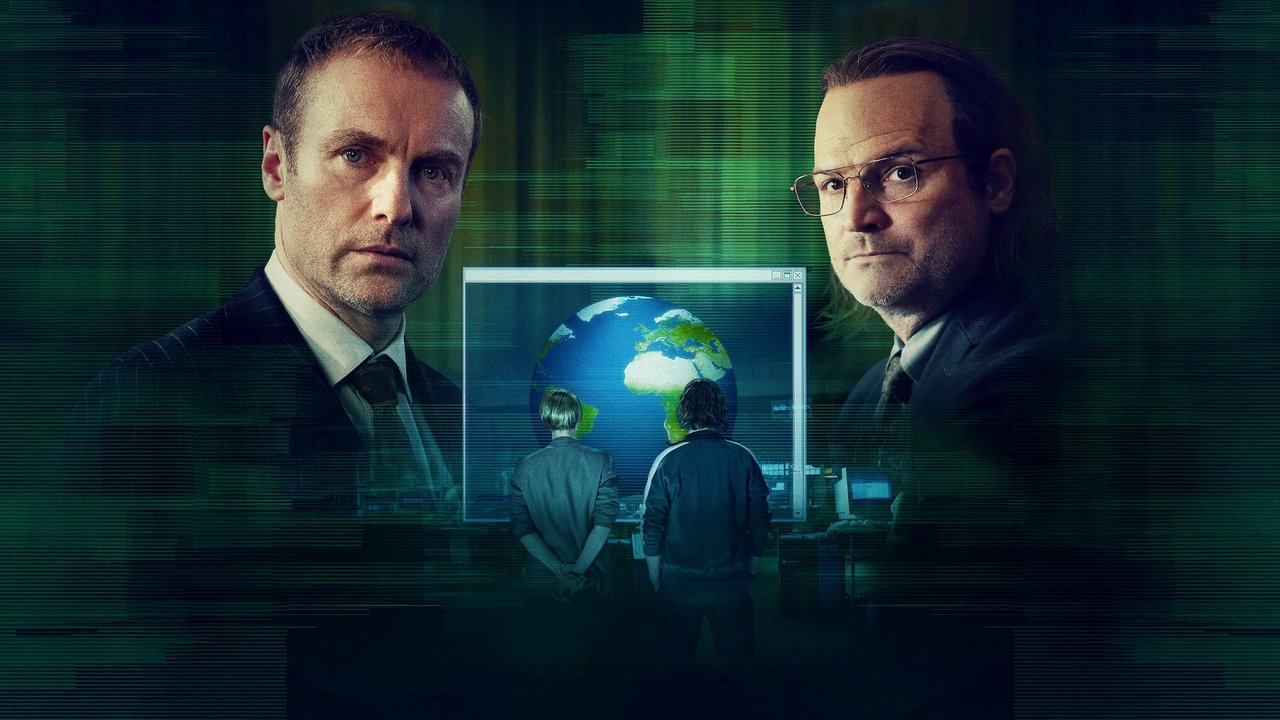
 Now showingThe Billion Dollar Code2021 · Drama
Basement: German-language films and series, from Otto - The Movie, Welcome to Hartmanns and Turkish for Beginners to Schultze Gets the Blues, 100 Things, The Wall and The Billion Dollar Code, and where to watch them
170 films and series from Germany, Austria and Switzerland, 1954 to 2026, chosen for the whole household.
Top shelf
Whole shelf →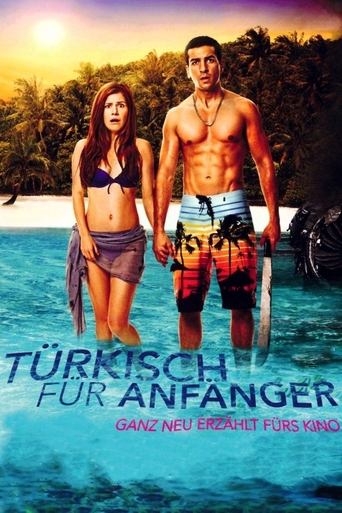


Comedy
Whole shelf →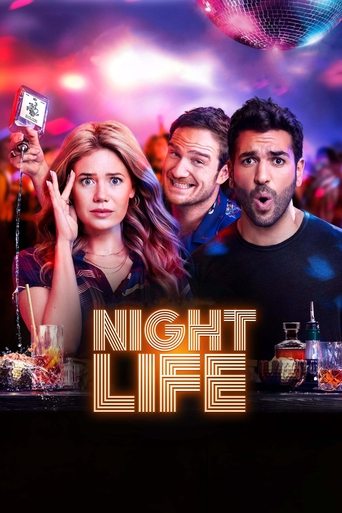


Family
Whole shelf →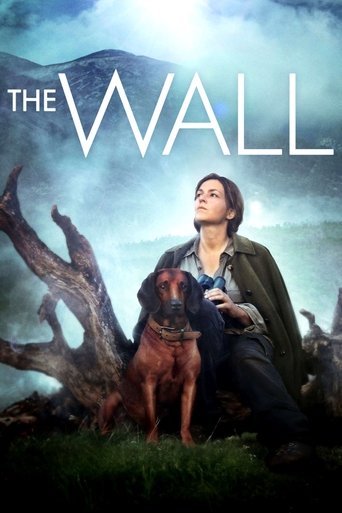



Series
Whole shelf →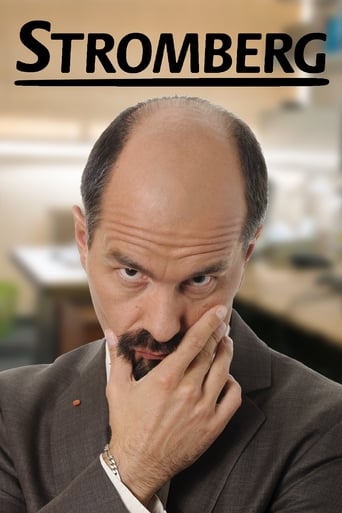
Classics
Whole shelf →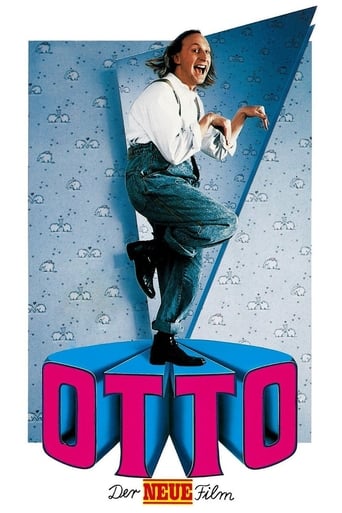


New arrivals
Whole shelf →


German-language films for the whole household: the Basement guide
Basement: German-language films and series, from Otto - The Movie, Welcome to Hartmanns and Turkish for Beginners to Schultze Gets the Blues, 100 Things, The Wall and The Billion Dollar Code
Many German houses have a room below the stairs that belongs to the evening. It may hold a table-tennis table, a shelf of old records, a bar that an uncle built in 1978, and, more and more often, a projector and a row of comfortable seats. Germans call it the hobby cellar or the party cellar, and it is where the family goes to watch a film together when the weather has closed in. Basement is named for that room. It is a guide to 170 films and series in German, from Germany, Austria and Switzerland, made between 1954 and 2026: 157 films and 13 series. Each has its own page, with its story, its director and cast, and a Watch now button that leads to the official services carrying it in your country.
The catalogue has been chosen for the whole household. Every title was read through by hand, and the selection favours comedies, family films, love stories, road films, a group of well loved classics and a few of the thoughtful dramas for which German-language cinema is admired. Crime thrillers, horror, films of the battlefield and comedies made strictly for adults were left out. Viewers outside the German-speaking countries tend to know its cinema by its most serious works; what is gathered here is the other side, the films that German, Austrian and Swiss families actually take down from the shelf.
This guide explains how the collection is arranged, walks along each shelf in turn, picks out the titles most worth an evening, and ends with a plan for a first month and a short set of questions and answers. Every title named here has a page on Basement, and a click on its name opens that page.
The shelves
The home page is laid out as the room itself might be. At the top is a framed screen with a still from one of the highest rated films, under the words Now showing. Below it, the posters stand on wooden shelves, seven to a row. The top shelf holds the most popular titles; then come shelves for comedy, for family films, for series, for the classics and for new arrivals. The menu in the header leads to the full index of Films, to Series, to the Comedy, Family and Classics shelves, and to the A to Z list.
By kind, 118 titles are comedies and 80 dramas, with a good many counted as both; 64 are family films in a broad sense, 35 are romances, 21 turn on music and 21 are journeys. Twenty-five were made in Austria or Switzerland. By period, 22 date from before 1990, 35 from 1990 to 2009, 36 from 2010 to 2015, 29 from 2016 to 2019 and 48 from 2020 onwards.
That spread reflects the history of the industry. In the 1950s West German and Austrian studios made bright, comforting films in colour for an audience that wanted to be cheered: holiday comedies, costume romances, musical farces set by lakes and in mountain inns. The young directors of the late 1960s rebelled against all that and made the austere, searching films that won prizes abroad. From the 1980s a new popular comedy grew up around television comedians, and since the 1990s German-language cinema has had both at once, a flourishing art cinema and a run of comedies that regularly outsell the films from Hollywood at home. Basement has examples of every stage.
A word on titles. Films are listed under their English titles where these are in general use and under their German titles otherwise; the search box recognises both. Each page also shows the original title, which is the one to use on a German, Austrian or Swiss service.
German comedy
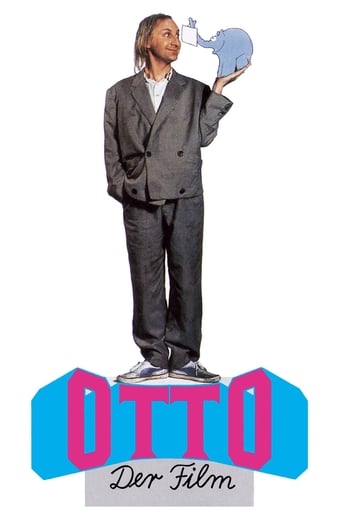
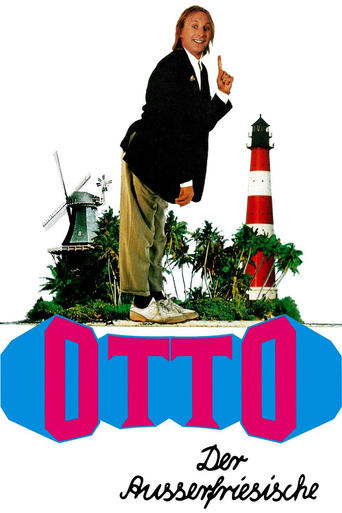
The old joke that Germans lack a sense of humour is the opposite of the truth, as anyone who has sat in a German cinema on a Saturday night can report, and 118 titles on Basement are comedies. The form's modern history begins with a man from East Frisia. Otto Waalkes was already the best loved comedian in the country, a wiry figure with long fair hair, a guitar and a talent for nonsense, when he made Otto - The Movie in 1985. It was seen by nearly fifteen million people and remains among the most successful German films ever released. The plot, in which Otto arrives in Hamburg owing money to a loan shark and falls for a rich man's daughter, is a string on which to hang sketches, songs and wordplay. Otto – The New Movie, Otto – The Alien from East Frisia and, many years later, Otto's Eleven continued the run.
The 1980s had other heroes. Dieter Hallervorden, a slapstick comedian with a rubber face, stars in Non-Stop Trouble with my Double, in which a taxi driver is the exact image of a millionaire, and in The Beginner, about a man who decides at sixty to take his school-leaving examination. Thomas Gottschalk and Mike Krüger, two lanky television presenters, made Piratensender Powerplay, about a pirate radio station run from a camper van, and Zwei Nasen tanken Super. Superstau strands a cross-section of the nation in the great holiday traffic jam on the motorway south.
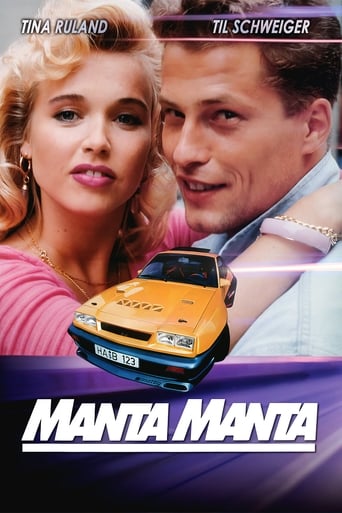
After the fall of the Wall came the car comedies. Manta, Manta, from 1991, is set among the young men of the Ruhr who lavish their wages on a particular make of sports coupé, and made a star of Til Schweiger; Manta - Der Film rushed out the same year, and Manta, Manta: Legacy revisited the hero in 2023 as the owner of a struggling go-kart track. Go Trabi Go 2: Those Were the Days of the Wild East follows an East German family and their little two-stroke car into the new era. Superbug, the Craziest Car in the World belongs to an older series about a yellow beetle with a mind of its own.
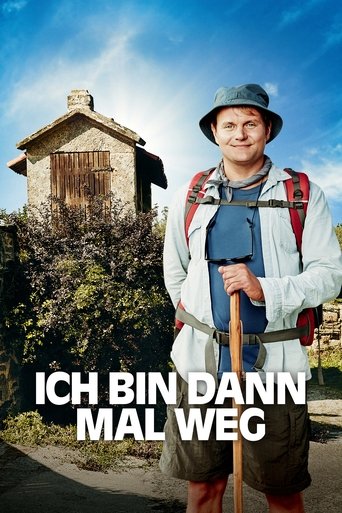
Hape Kerkeling, a comedian of great warmth, is represented by Kein Pardon, his satire on a television variety show and the young man from the Ruhr who dreams of appearing on it, and as the author of the book behind I'm Off Then, in which an overworked entertainer walks the pilgrim road across northern Spain and finds it both harder and funnier than expected. Michael Herbig's sketch programme fills the cinema in Bullyparade: The Movie, and he leads Buddy, about a spoilt heir and his guardian angel.
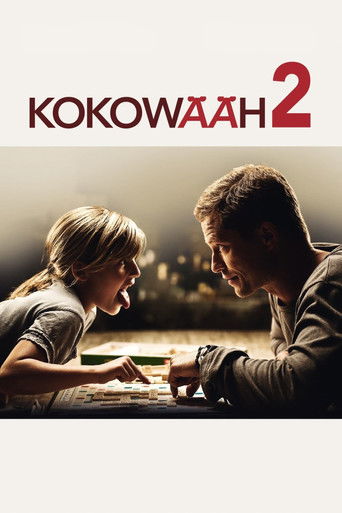
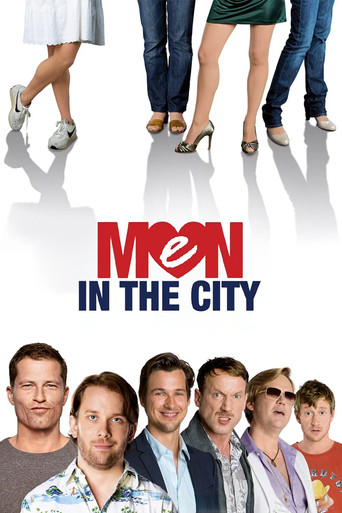
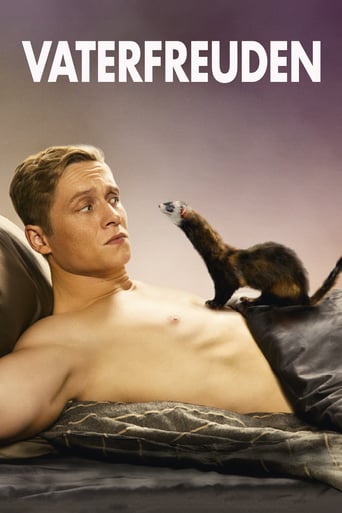
Til Schweiger became the dominant figure of the next decades, as actor, director and producer. Kokowääh 2 continues his comedy about a screenwriter and the small daughter who arrived in his life unannounced. The Wedding sends three old friends to a wedding where everything goes wrong, a sequel to Class Reunion 1.0. Men in the City and Men in the City 2 follow five Berliners who meet at the same gym, and What a Man, Break Up Man, Woman in Love and Joy of Fatherhood, in which two brothers and a ferret find themselves in charge of a baby, star Matthias Schweighöfer, the leading comic actor of the generation after.
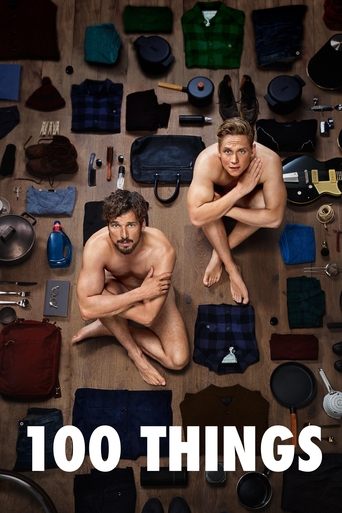
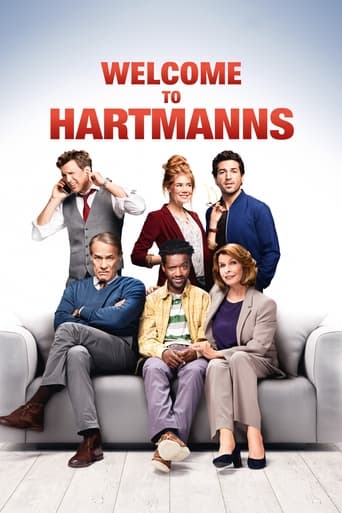
The comedies that have travelled best are those with a subject. Welcome to Hartmanns was the most seen German film of its year. A comfortable Munich family, a retired headmistress, her surgeon husband and their grown children, take in a young man from Nigeria who has applied for asylum, and their good intentions collide with one another and with the neighbours. Simon Verhoeven's film is warm and sharp at once. Turkish for Beginners strands a strait-laced German girl and a swaggering Turkish-German boy on a desert island after their plane comes down, while their parents fall in love at the hotel; it grew from a much loved television series. 100 Things has two friends who run a software firm bet that they can give up everything they own and take back one possession a day. High Society is a comedy of two babies exchanged at birth, one raised in luxury and one in a tower block.
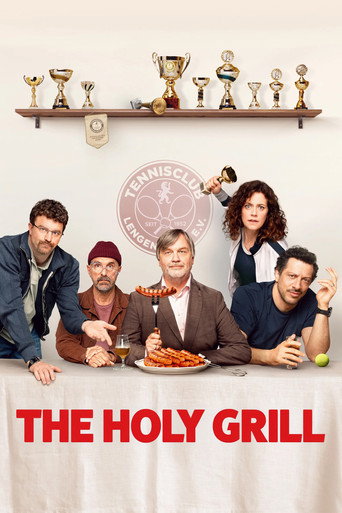
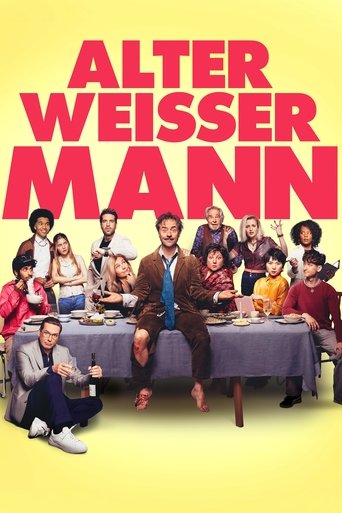
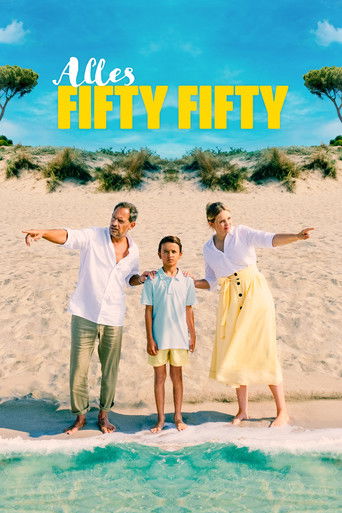
Frau Müller muss weg! takes place in one classroom on one afternoon, as a delegation of parents arrives to tell a primary teacher that she must go, and discovers a good deal about itself. A Thousand Lines is a satire drawn from a real scandal at a famous news magazine. Old White Man, The Holy Grill and Everything's Fifty Fifty, about divorced parents sharing a holiday with their son, are among the newest.
The classics of the 1950s and 1960s
Twenty-two films date from before 1990, and the earliest belong to the years when cinema was the great comfort of the German-speaking countries. Three Men in the Snow, from 1955, is taken from a novel by Erich Kästner. A millionaire enters a competition run by his own company under a false name, wins second prize, a stay at a grand hotel in the Alps, and goes disguised as a poor man to see how he will be treated; the first-prize winner, who really is poor, is mistaken for him. It is a perfectly constructed comedy of manners and has been shown on television every winter since.
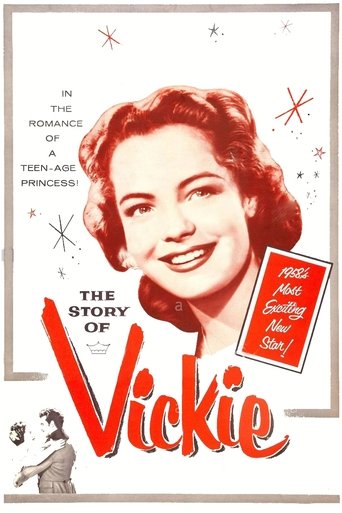
The Story of Vickie, made in Vienna in 1954, cast the sixteen-year-old Romy Schneider as the young Queen Victoria, slipping away from her court to see the world and meeting a certain German prince at an inn. Its success led directly to the films about the Empress Elisabeth that made her famous, and Sissi - Forever My Love is the version of those three films that was assembled for audiences abroad. She appears again in Monpti, a bittersweet romance of a poor Hungarian artist and a seamstress in Paris.
I Often Think of Piroschka, from 1955, is among the most loved German films of its decade. An elderly writer on a train remembers the summer of 1925, when he went as an exchange student to a village on the Hungarian plain and fell in love with the stationmaster's daughter, played by the Swiss actress Liselotte Pulver with a laugh that became famous. The White Horse Inn, from 1960, films the operetta about a head waiter in love with the landlady of a hotel on an Austrian lake, with the singer Peter Alexander.
The Tiger of Eschnapur is something grander. In 1959 Fritz Lang, who had made some of the greatest silent films before leaving for America, returned to Germany to direct an adventure he had written forty years earlier: a German architect travels to an Indian principality to build for a maharajah and falls in love with a temple dancer. It is a storybook spectacle in glowing colour, filmed partly in the palaces of Rajasthan.
East Germany had its own studios, and three of their films are here. The Silent Star, from 1960, was the first science-fiction film made there, from a novel by Stanisław Lem: an international crew flies to Venus to discover the meaning of a message found in the Gobi desert. Eolomea, twelve years later, is a thoughtful space mystery. Mother Hulda is one of the fairy-tale films for which those studios are still admired, the story from the Brothers Grimm of the girl who falls down a well and shakes the old woman's feather beds until it snows on earth.
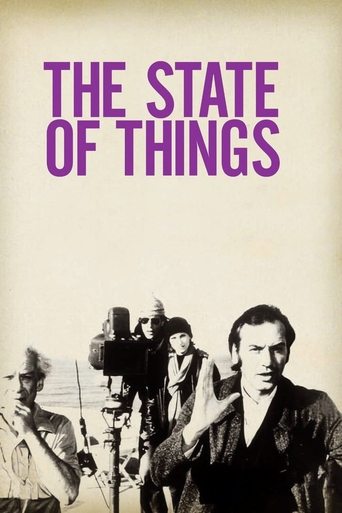
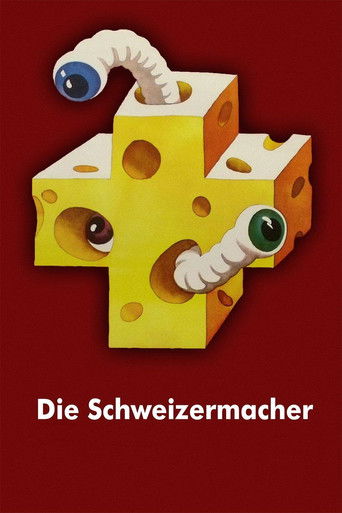
The new directors of the 1960s and after are represented by a handful of landmark works. Yesterday Girl, by Alexander Kluge, follows a young woman from the East adrift in the West and was the first German film to win a major prize at Venice after the war. Chronicle of Anna Magdalena Bach tells the life of the composer through his music, performed in the rooms where it was first heard. The State of Things, by Wim Wenders, which won the highest prize at Venice in 1982, is about a film crew stranded on the Portuguese coast when the money runs out. The Swissmakers, from 1978, is the most successful Swiss film ever made, a comedy about two officials whose task is to decide whether applicants are fit to become citizens.
On the road
Twenty-one titles are journeys, and the road film may be the form in which German-language cinema is happiest. Schultze Gets the Blues is the best of them and one of the most charming films in the catalogue. Schultze is a large, silent man who has worked all his life in a salt mine in Saxony-Anhalt and played polkas on the accordion at the local music club. Pensioned off, he hears on the radio one night a snatch of music from Louisiana, fast, bright and strange, and finds that his fingers want to play it. The club is scandalised; Schultze, who has hardly left his village, sets out for America. Horst Krause plays him almost wordlessly, and the film was honoured at Venice.
Friendship! is a comedy drawn from a true story: two young East Germans, in the first months after the Wall came down, fly to New York with very little money and less English, meaning to reach the Golden Gate Bridge. I'm Off Then follows the pilgrim road to Santiago. Highway to Hellas sends a German bank inspector to a small Greek island to check on a loan. Greetings from Fukushima, by Doris Dörrie, filmed in black and white, takes a young German woman to Japan, where she helps an elderly geisha return to her ruined house.
Magical Mystery or: The Return of Karl Schmidt puts a quiet man in charge of the tour bus of a techno record label in the 1990s. Alive and Ticking is about a teenager with Tourette syndrome who finds a group of friends like herself. Jungle Child is the true story of a German girl who grew up with her parents among a remote people in New Guinea. Tom Sawyer is a German film of the American classic, shot on the rivers of Brandenburg and Romania, and children enjoy it very much.
Family films
Sixty-four titles are on the Family shelf. For younger viewers, Mother Hulda and Tom Sawyer have been mentioned. Silver and the Book of Dreams is a fantasy for teenagers, from a best-selling series of novels, about a girl who discovers that she can walk into other people's dreams. Wild Chicks in Love comes from the books of Cornelia Funke about a gang of five girls and their rivals, a gang of boys. Freche Mädchen is a comedy of three friends of fourteen and first love. Into the Beat is a dance film in which a ballet student from a famous family discovers street dance, and Takeover has two boys who look exactly alike exchange lives.
Jack, shown in competition at Berlin, is a more serious film that older children and parents can watch together: a boy of ten in Berlin, who looks after his small brother because their young mother so often forgets to, sets out across the city to find her. It is told plainly and with complete sympathy for the child. Erbsen auf halb 6 is a road film about a theatre director who has lost his sight and the blind woman sent to help him learn to live with it.
Many of the comedies are about parents and children. Kokowääh 2, Joy of Fatherhood and It's for Your Own Good, in which three fathers join forces against their daughters' unsuitable boyfriends, are light. What Have We Done to Deserve This? is an Austrian comedy about a liberal mother whose teenage daughter announces a conversion. The Superwife and Frau Ella, about a young taxi driver and the eighty-seven-year-old woman he helps to escape from hospital, belong here too, and Three Men in the Snow remains the family film of every Christmas.
Romance
Thirty-five titles are love stories. Text for You begins when a young woman, two years after losing her fiancé, sends a message to his old telephone number, which now belongs to a sports journalist; it was remade in English some years later. The Space Between the Lines is the story of two strangers who begin an exchange of emails by mistake and are afraid to meet. Young Goethe in Love imagines, with great high spirits, the summer of 1772 in which a failed law student of twenty-three fell for a girl who was promised to another, and wrote the novel that made him famous across Europe.
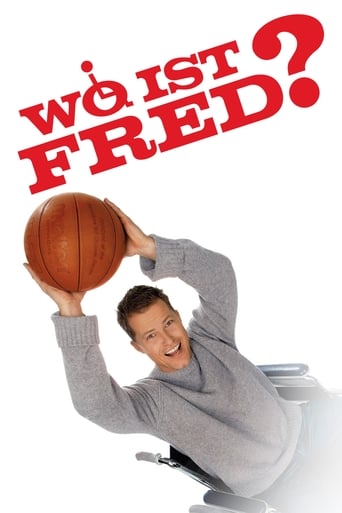
French for Beginners is a comedy of a school exchange. Where Is Fred?, Rate Your Date, The Heartbreak Agency, Just Something Nice, by and with Karoline Herfurth, and It's Just a Phase, Honeybunny, about a couple of fifty who have stopped noticing each other, are modern romantic comedies. Russendisko follows three young friends from Moscow who arrive in Berlin in 1990, and Soloalbum a music journalist whose girlfriend has left him by fax. From an earlier age, I Often Think of Piroschka and Monpti are still the ones that people remember.
Austria and Switzerland
Twenty-five titles come from Austria and Switzerland, and they have a character of their own. The Wall, an Austrian film of 2012 from a celebrated novel, is the most remarkable. A woman visiting friends at a hunting lodge in the mountains wakes to find that an invisible barrier has cut the valley off from the rest of the world. With a dog, a cat and a cow for company, she learns to grow food, to mow and to endure the seasons, and writes down what happens. Martina Gedeck is alone on screen for almost the whole film, which is a hymn to the Alpine landscape and to the bond between people and animals. It is a calm, grave work with one sad episode involving the dog, and suits older viewers.
A Whole Life, from 2023, tells the story of one man in one valley across eighty years: Andreas Egger, a farm labourer who helps to build the first cable cars, loves once, and grows old as the tourists arrive. It is taken from a short novel that was read all over the world. Mademoiselle Paradis is set in Vienna in 1777, where a blind girl who is a brilliant pianist is sent to a famous doctor for a cure. Sachertorte is a romantic comedy about a young Berliner who waits every afternoon in a Viennese café for a woman he met once.
From Switzerland come The Swissmakers; The Awakening of Motti Wolkenbruch, a comedy about a young man from an Orthodox Jewish family in Zurich whose mother has a list of suitable brides and who falls for a fellow student who is on nobody's list; Unrest, a quiet and beautiful film about the watchmakers of a valley in the Jura in the 1870s; The Girl and the Spider, set during a move from one flat to another; and Bonjour Switzerland, a comedy in which a referendum threatens to abolish all but one of the country's languages. My Little Sister is a Swiss drama in which Nina Hoss plays a playwright who gives up everything to help her twin brother, an actor, return to the stage.
Two of the series are Swiss as well. Gotthard dramatises the building of the great railway tunnel under the Alps in the 1870s through three young people, an engineer from Germany, a miner from Italy and a carter's daughter from the village at its mouth. New Heights brings a management consultant from Zurich back to the family farm he left.
East and West
Thirteen titles concern the two German states that existed side by side from 1949 to 1990, and the years just after. Besides the films of the eastern studios described above, there are several comedies of the change. Open the Wall recreates the night of 9 November 1989 at one Berlin border crossing from the point of view of the officers on duty, who have heard a confused announcement on television and face a growing crowd while their superiors stay silent. It is very funny and, by the end, moving. A Stasi Comedy is a satire about a young man sent to spy on the poets of an East Berlin neighbourhood who becomes one of them. Friendship! and Go Trabi Go 2: Those Were the Days of the Wild East show the first journeys westward.
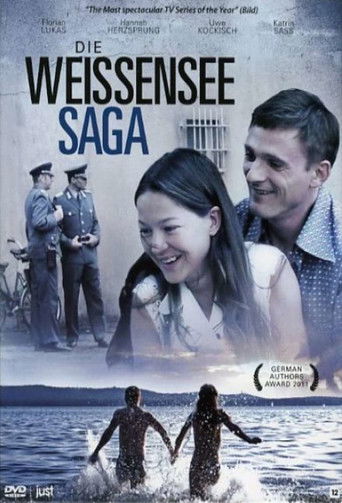
The Weissensee Saga is the major drama of the group, a television series that follows two East Berlin families, one loyal to the state and one critical of it, from 1980 to the months after reunification. It has been compared to the great family sagas of American television and was widely praised for its fairness. Shores of Hope is the story of two dock workers in Rostock who dream of going to sea. Wackersdorf is set in the West, in Bavaria in the 1980s, where a district administrator who had welcomed a nuclear plant begins to listen to the people protesting against it.
Series
Thirteen series are listed. The Billion Dollar Code is the best known abroad. In four episodes it tells the true story of two young men in Berlin, an art student and a programmer, who in the early 1990s built a program that let the user fly from space down to any point on the globe, and who went to court twenty years later against one of the largest companies in the world. It is a courtroom drama, a story of friendship and a portrait of Berlin in the first years after the Wall.
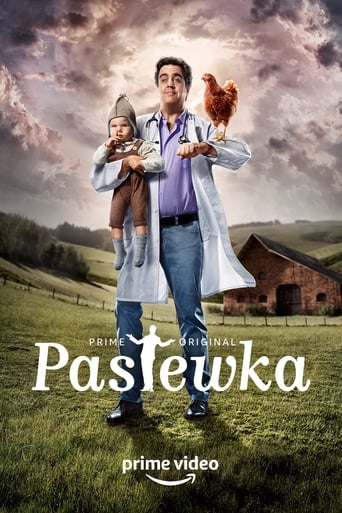
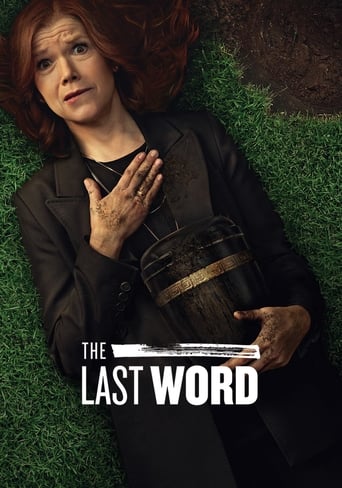
Stromberg is the German counterpart of a famous British office comedy, with an insurance manager whose vanity and tactlessness are boundless; it ran for five seasons and has a devoted following. Pastewka has the comedian Bastian Pastewka playing a version of himself to whom small disasters happen daily. Doppelhaushälfte puts two very different families in the two halves of one house on the edge of Berlin. The Last Word stars Anke Engelke as a widow who discovers a talent for speaking at funerals, and The Perfect Miss is set at a finishing school of the 1950s.
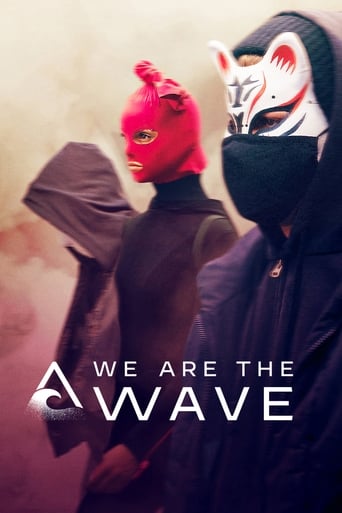
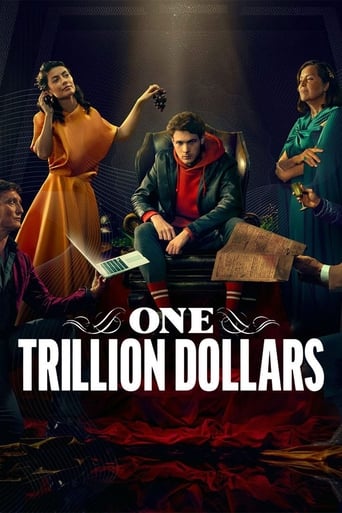
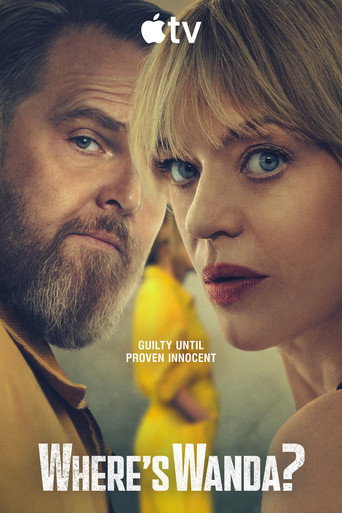
One Trillion Dollars follows a bicycle courier in Berlin who inherits the largest fortune in history together with a prophecy about what he must do with it. Where's Wanda? is a dark-edged comedy about a suburban family who take matters into their own hands when their daughter goes missing. We Are the Wave is about a group of teenagers who form a movement, Berlin ER is set in the emergency department of a city hospital, and Gotthard and New Heights are the Swiss titles already described.
Drama
Eighty titles are listed under Drama, and several are among the most admired German-language films of recent years. Home from Home – Chronicle of a Vision is the late masterpiece of Edgar Reitz, who spent thirty years filming the story of one village in the Hunsrück hills. This chapter goes back to the 1840s, when hunger drove thousands of villagers to emigrate to Brazil, and follows a blacksmith's son who reads everything he can find about the Indians of the Amazon and dreams of leaving. It is filmed in black and white with sudden touches of colour, and it is nearly four hours long and worth every minute.
The Audition gives Nina Hoss the role of a violin teacher at a music school who stakes everything on one gifted and anxious pupil. A Heavy Heart is about a former boxing champion, gruff and solitary, who learns that he is ill and tries to mend matters with his daughter. The Forest for the Trees was the first film of Maren Ade, a painfully funny study of a young teacher from the country who is too eager to be liked. Life Is All You Get is a warm, crowded picture of Berlin in the 1990s by the director who later made a famous comedy about the fall of the Wall.
Paula is the life of Paula Modersohn-Becker, the painter who left an artists' village in northern Germany for Paris at the start of the last century and found her own way of seeing. The Glory of Life tells the story of the last year of Franz Kafka and the young woman who shared it with him. Buddenbrooks is a handsome film of the novel by Thomas Mann about the decline of a merchant family in Lübeck. Mack the Knife - Brecht's Threepenny Film imagines the film that Bertolt Brecht wanted to make of his own stage hit. The Castle is a version of the unfinished novel by Kafka, made for television by a director who became one of the most honoured in Europe.
Gold is a western made by Germans: in 1898 a party of German emigrants sets out across the Canadian wilderness for the gold fields, and Nina Hoss plays the one who will see the journey through. Unrest, A Whole Life and The Wall have been described. The End Is My Beginning is a conversation between a dying journalist, who had reported from Asia for thirty years, and his son, with Bruno Ganz. Hut in the Woods is about a mathematician who has lost his job and an orphan boy who has lost everything. Above Us Only Sky and My Words, My Lies - My Love are dramas of love and deception.
Music
Twenty-one titles turn on music. Schultze Gets the Blues and The Audition lead them. Chronicle of Anna Magdalena Bach is the purest: the great harpsichordist Gustav Leonhardt plays the composer, and the camera simply watches and listens. Into the Beat is the dance film. Fraktus is a spoof documentary about the reunion of a forgotten electronic band who claim to have invented techno. Soloalbum and Magical Mystery or: The Return of Karl Schmidt are set in the music business, and The White Horse Inn and the films with Peter Alexander belong to the older tradition of the musical comedy, in which a waiter might break into song between courses.
True stories
Eleven titles are drawn from real events. Heavyweights is a cheerful comedy about the two rival bobsleigh crews from one Bavarian village who, in 1952, had to combine into a single team for the Winter Olympics, and won. The Billion Dollar Code and Gotthard have been described, along with Paula, The Glory of Life, Jungle Child and Friendship!. A Thousand Lines and Wackersdorf look at recent history. Mademoiselle Paradis is based on the life of a real pianist of Mozart's Vienna. Seen together, they make an entertaining introduction to two centuries of Central European history.
Curiosities
Every cellar has a shelf of oddities, and Basement has several films that fit nowhere else. Tuvalu is a fairy tale almost entirely free of dialogue, set in a crumbling public swimming bath kept going by a dreamy young man and a steam engine; it is tinted in sepia and blue like a film of the 1920s, and was shot in Bulgaria by a German director with actors from five countries. His later film The Bra is another wordless comedy, about a train driver on a line that runs through the washing lines of a town in Azerbaijan.
Copy Shop is a twelve-minute Austrian film, nominated for an Academy Award, in which a man who works at a photocopier accidentally copies himself, and the copies keep coming. The Ordinaries is set in a world where everyone is a character in a film, divided into leading roles, supporting roles and outtakes, and a girl at the school for leading characters goes looking for her father. Hai-Alarm am Müggelsee is a parody of disaster films set at a Berlin lake, Agent Ranjid Saves the World a spoof of spy films, and Siegfried a comic retelling of the oldest German legend. Caveman, from a long-running stage show, wonders how much has changed since the Stone Age.
An evening for every mood
The best use of a cellar cinema is to match the film to the evening, and a few suggestions may save time at the shelf. For an evening when everybody is tired and wants only to laugh, take one of the broad comedies: Bullyparade: The Movie, Superstau or Non-Stop Trouble with my Double ask little of the viewer and give a good deal back. For an evening with guests, a comedy with something to argue about afterwards is better, and Frau Müller muss weg!, Welcome to Hartmanns and 100 Things have each started many a discussion over the last of the wine.
For a wet Sunday afternoon with children, the classics are the thing. Three Men in the Snow and Mother Hulda can be followed with hot chocolate, and Tom Sawyer with a walk to the nearest river. For a quiet evening alone, the films of landscape and silence come into their own: The Wall, A Whole Life, Unrest and Tuvalu reward a viewer who has time to spare.
For a couple, the romances of two different ages make an interesting pair: I Often Think of Piroschka one night and The Space Between the Lines the next show how much courtship has changed in sixty years and how little the feelings have. For anyone curious about recent history, Open the Wall, Friendship! and The Weissensee Saga together explain more about the end of the divided country than most textbooks, and with far better jokes.
And for the evening when the household is unable to agree, there is always the oldest rule of the cellar: the person who carried down the snacks chooses the film, and everyone else may choose next time. The Top rated shelf, with 32 titles, is a safe place for that person to look.
One last piece of cellar wisdom: keep a second choice ready. A film that suits the mood at eight o'clock may feel too long by nine, and a short comedy such as Copy Shop, which lasts twelve minutes, or a single episode of Pastewka makes a pleasant end to an evening that began with something weightier.
Faces to follow
A good way through the collection is to follow a face. Nina Hoss, the leading German actress of her generation, appears in Gold, The Audition and My Little Sister, three very different women with the same quiet force. Romy Schneider can be seen at sixteen in The Story of Vickie and a few years later in Monpti. Liselotte Pulver lights up I Often Think of Piroschka. Bruno Ganz, the great Swiss actor, is the father in The End Is My Beginning.
Among the comedians, Otto Waalkes, Dieter Hallervorden and Hape Kerkeling each have several films, and watching them in order of date is a history of what Germany laughed at from 1980 to 2010. Matthias Schweighöfer shares 100 Things with Florian David Fitz, who also wrote and directed it. Karoline Herfurth, who directed Text for You and plays its heroine, has become one of the most popular directors in the country. Elyas M'Barek, the star of Turkish for Beginners, leads Nightlife, a comedy of one disastrous first date in Berlin.
Among directors, Doris Dörrie has two films here, Greetings from Fukushima and Freibad, a comedy set at a women's open-air swimming pool. Veit Helmer has his two wordless fables. Simon Verhoeven made both Welcome to Hartmanns and Men in the City. Sönke Wortmann, represented by Little Sharks and Frau Müller muss weg!, has been making intelligent comedies for thirty years, and Detlev Buck, who directed It's a Jungle Out There, is their unpredictable northern cousin.
Using Basement
The site is meant to feel like the room. The header carries the name as a glowing amber sign, then the menu and the search box. The menu opens the full list of Films, the Series, the shelves for Comedy, Family and Classics, the A to Z index and My List. Type a title in the search box and matches appear as you type; original German titles are recognised as well as English ones, so a viewer who knows a film as Die Wand will find it as readily as one who knows it as The Wall.
Every title has a page of its own. At the top are the poster, the title in English and in German, the year, the running time and the genres. Below come the story, the director and the leading actors; a series also shows its seasons and episodes. The Watch now button sits beside the poster. Choose your country from the list, press the button, and JustWatch opens with the services that carry that title where you live: subscription services, shops for rental and purchase, and free services supported by advertising. Germany, Austria and Switzerland head the list of countries, since these films are most widely available there, and the public broadcasters of all three keep many of them in their own free libraries for a time after each showing.
My List is the box beside the projector where the next few films are kept. On any page, Add to My List drops the title into that box, which lives in the browser you are using. The My List link in the menu opens it, and a button on that page saves its contents as a small file, so that the box can be carried upstairs to another device. It needs neither an account nor a password, and nobody but you can look inside.
Watching in German
Most of these titles are offered with English subtitles on international services, and many services allow German subtitles as well, which is the method that teachers recommend for learners past the first stage. German comedy is rich in dialect, and the collection is a tour of the map: the clipped northern speech of Otto and of It's a Jungle Out There, the Ruhr accent of Manta, Manta and Kein Pardon, the Berlin wit of Open the Wall, the Bavarian of Heavyweights, the soft Viennese of Sachertorte and the Swiss German of The Swissmakers, which is subtitled even for audiences in Germany. Learners may find the family comedies and the series the easiest to follow, and the films of the 1950s, in which everyone speaks slowly and clearly, are a pleasure for the ear.
A first month
For a newcomer, here is one way to spend four weeks in the cellar, two films a week.
In the first week, laugh with the neighbours. Welcome to Hartmanns shows a modern German family at its most recognisable, and Otto - The Movie shows what the same country was laughing at forty years ago.
In the second week, take to the road. Schultze Gets the Blues goes from a mining village to the bayous, and Friendship! from East Berlin to San Francisco. Both are about people seeing the wider world for the first time, and both are full of affection.
In the third week, light the stove and watch the classics. Three Men in the Snow and I Often Think of Piroschka are seventy years old and as fresh as ever; children will enjoy the first, and anyone who has ever been young will enjoy the second.
In the fourth week, go up into the mountains with The Wall or A Whole Life, and then give four evenings to The Billion Dollar Code. After that the shelves are yours. Top rated holds the 32 titles with the highest scores from viewers; the year shelves run from 1954 to the present; and the shelf of curiosities described above is there for the evening when only something odd will do.
How the titles were chosen
Every title on Basement was selected by a person and checked by hand. The starting point was the record of German-language feature films and scripted series held by TMDB with a poster, a still image, a written description and a fair number of ratings from viewers, which gave more than seven hundred candidates. From that list we set aside crime thrillers and detective series, horror, films of the battlefield, and comedies and dramas made strictly for adults. We then read each remaining description, kept the titles that a household could watch together or that an adult could watch with a parent in the room, and looked a second time at any that raised a doubt.
The result has a clear character: 118 comedies, 80 dramas, 64 family titles, 35 love stories, 21 journeys and 21 films about music, with many counted under more than one heading; 157 films and 13 series. Each title appears on Basement alone among our sites, so the catalogue is its own. Posters, cast lists and descriptions come from TMDB, and the Watch now links are provided by JustWatch, which records where each title is officially available country by country.
A note on the name. Basement is an independent guide, and its design, with the amber sign, the framed screen and the wooden shelves, was drawn for this site. The idea behind it is simply that a good film deserves a comfortable room, a few people to share it with, and somebody who has already been through the shelf and can say which ones are worth taking down.
Questions and answers
Questions
What is Basement?
Basement is a guide to 170 German-language films and series from Germany, Austria and Switzerland, made between 1954 and 2026 and chosen for the whole household. Each page gives the story, year, director and cast, and a Watch now button that leads to the official services carrying the title in your country.
Which film should I watch first?
Start with Welcome to Hartmanns, Schultze Gets the Blues or Three Men in the Snow. The first-month plan in the guide suggests an order for eight evenings.
Is the catalogue suitable for families?
Yes. Every title was screened by hand, and the selection keeps to comedies, family films, love stories, road films, classics and thoughtful dramas. A few dramas are best for older viewers, as the guide explains.
Are the films available with subtitles?
Most official services offer English subtitles, and many add German subtitles for learners. The services listed for each title show what they provide.
How many titles come from Austria and Switzerland?
Twenty-five, among them The Wall, A Whole Life, The Swissmakers and the series Gotthard. They have a shelf of their own.
Are there series as well as films?
Yes. Thirteen series are listed, from the comedies Stromberg and Pastewka to The Billion Dollar Code and The Weissensee Saga.
How does My List work?
Press Add to My List on any page. The list is kept by your own browser, free of charge, and the My List link in the menu opens it.
Does Basement host films or downloads?
Basement is a guide only. Every Watch now button leads to an official, licensed service.